Real Estate Tips
How much land does one need
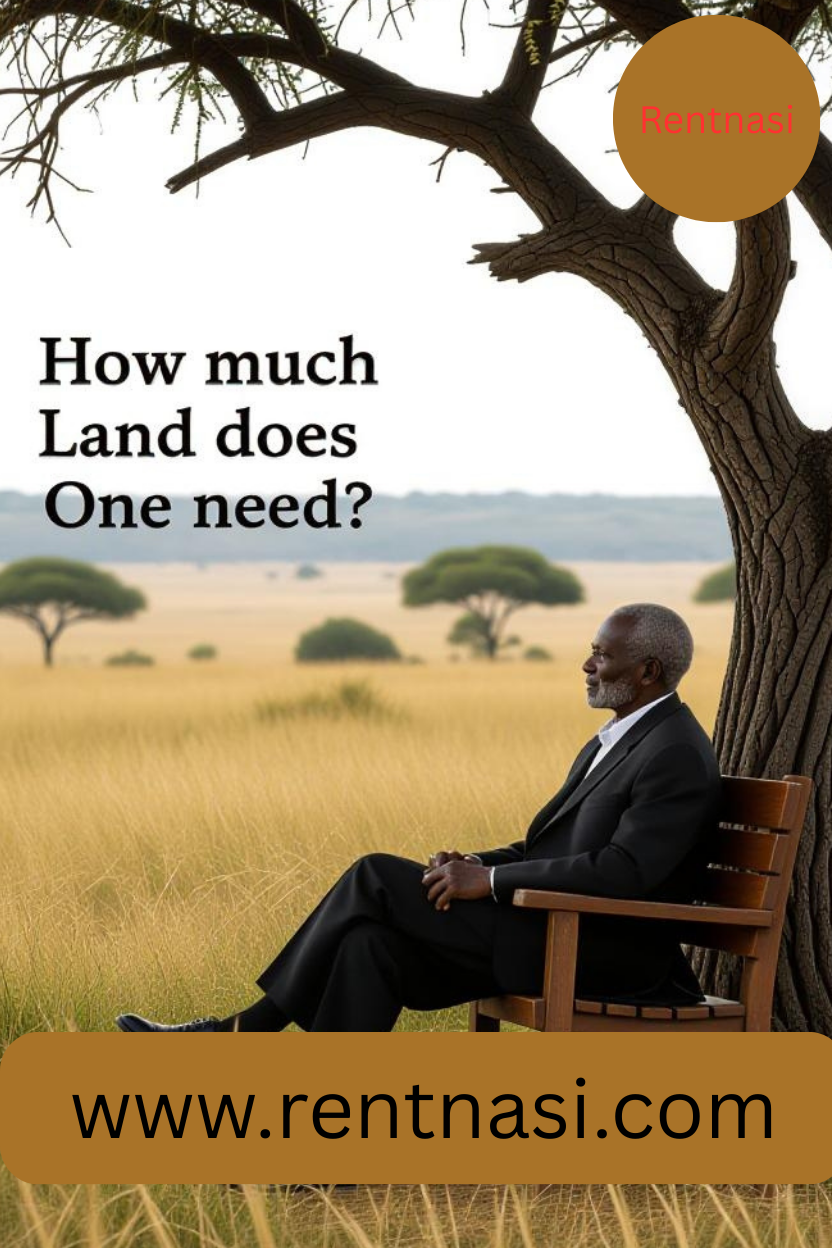
How Much Land Does a Man Need?
A Question of Desire, Sufficiency, and the Meaning of “Enough”
At first glance, “How much land does a man need?” appears to be a simple, almost practical question. It might bring to mind farmers tilling their soil, investors negotiating property deals, or families saving up for their first home. But this title carries far more weight than the sum of its words. It is less about land and more about the human condition about desire, survival, and the pursuit of meaning in a world where enough is never quite enough.
Land as the Foundation of Survival
Throughout history, land has been the bedrock of human life. It gives us food, shelter, security, and belonging. Ancient empires rose and fell over fertile valleys, and entire cultures were built upon the idea of shared or private land ownership.
In its most practical sense, “how much land does a man need?” can be answered simply: enough to grow food, enough to build shelter, enough to raise a family with dignity. But even here, the line is blurred. One person’s definition of “enough” may be another’s idea of scarcity. The farmer may dream of ten acres. The urban worker may only need a small plot. A nation, on the other hand, may never stop fighting for more territory.
And so, even on the surface, the question resists easy answers.
The Question Beneath the Question
When we peel back the practical, we arrive at the philosophical.
The real question is not about land — it is about limits.
-
How much is truly necessary for a good life?
-
At what point does need turn into greed?
-
When does ambition elevate us, and when does it consume us?
Human beings are rarely satisfied with “just enough.” Once we reach one milestone a home, a piece of land, a certain income we often desire more. This insatiable quality drives innovation, growth, and progress. But it also fuels inequality, conflict, and a restless spirit that can never find peace.
So, “how much land does a man need?” becomes shorthand for the eternal dilemma: Where do we draw the line between sufficiency and excess?
A Mirror to Modern Life
Today, land can be interpreted far beyond the soil beneath our feet. In a modern context, it represents:
-
Personal Space: How much freedom do we require to feel truly human? A room of one’s own? A vast estate? Or simply a corner of peace?
-
Resources: How much of the world’s water, energy, and food must each of us consume before it tips into exploitation?
-
Opportunities: How much social, financial, and intellectual “space” do we need to grow into our best selves?
The question echoes in every part of modern life: in the minimalism vs. consumerism debate, in the sustainability vs. exploitation crisis, and in the tension between ambition and balance.
The Psychology of “Enough”
Psychologists often speak of the hedonic treadmill the tendency of humans to quickly adapt to improvements in their circumstances. Get a raise, buy more land, upgrade your home, and soon the joy fades, replaced by new desires.
Enough is a moving target. What felt sufficient yesterday feels small today, and what feels abundant today will feel insufficient tomorrow. Without intentional reflection, we are condemned to run endlessly, chasing a finish line that never arrives.
Thus, the question isn’t really about external resources at all it is about internal satisfaction. How much peace, gratitude, and contentment do we cultivate within ourselves? Because without them, no amount of land or wealth, or success will ever suffice.
Toward a Deeper Answer
If we are honest, the question “how much land does a man need?” cannot be answered in acres or square feet. The true measure lies in balance:
-
Enough to live with dignity — to have food, shelter, and stability.
-
Enough to create meaning — to provide space for family, relationships, and growth.
-
Not so much that it enslaves — because ownership without peace becomes a prison.
At its core, the question is not about the land beneath us, but about the weight within us. We do not simply seek ground to stand on we seek assurance, identity, and the illusion of permanence in a world that is ultimately fleeting.
Closing Reflection
So, how much land does a man need?
Perhaps only enough to meet his true needs, not his endless wants. Perhaps only enough to remind him that he is a temporary traveler on this earth. Perhaps, in the deepest sense, only enough to rest — a reminder that all our pursuits, vast as they may seem, end in the same simplicity.
The challenge, then, is not to measure land in acres, but to measure ourselves in gratitude, restraint, and wisdom.
Because the real question is not about land at all.
The real question is: How much is enough for us to live — not endlessly wanting, but finally at peace?